 xdexygnr@gmail.com
Executive Summary: The Shift to “Living” Infrastructure
Are you tired of watching your hard-earned reputation slip away as guests grow frustrated in endless, suffocating queues? There is nothing more heartbreaking for a venue owner than seeing an excited visitor turn into an angry critic simply because the crowd became an unmanageable wall of chaos.
The Problem: Blindly managing a surge of people without real-time data is an operational disaster waiting to happen, leading to safety risks and lost revenue. When you cannot see where the “choke points” are forming, you are essentially flying a plane without a radar. This lack of visibility creates a stressful environment for your staff and an uncomfortable, often unsafe, experience for your customers. In the fast-paced markets of Saudi Arabia, a single bad experience shared on social media can tarnish your brand’s prestige overnight.
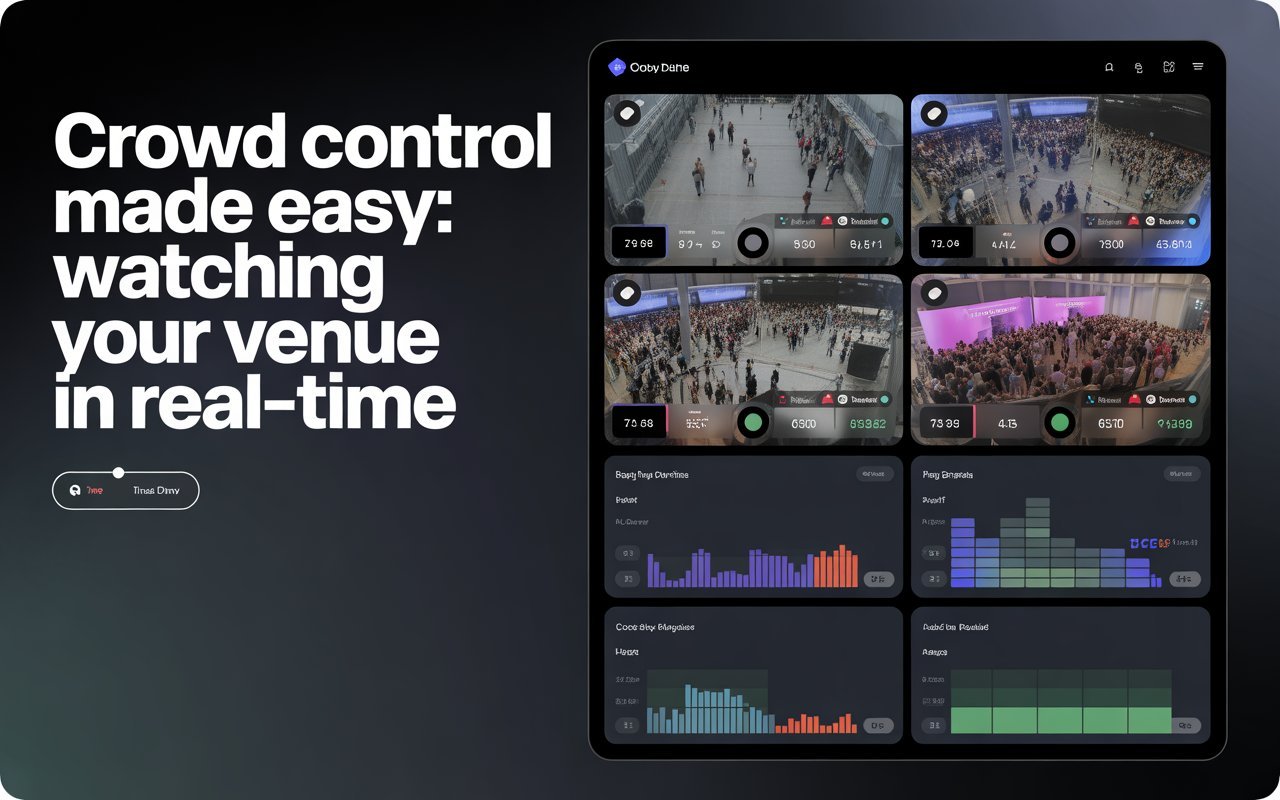
The Solution: Arrow Tech’s Smart Dashboard provides a “digital eye” that transforms chaotic movements into clear, actionable heat maps for instant control.
By integrating our intelligent monitoring software, you regain total authority over your space. Our system alerts you the moment a zone reaches capacity, allowing you to redirect traffic through automated signage or staff deployment before a bottleneck even starts. You aren’t just managing a crowd; you are orchestrating a premium, secure, and seamless journey that keeps your visitors coming back.
1. The Industry Problem: The Cost of “Dark Zones”
Most venues operate with “dark zones”—areas where management has no idea how many people are present until a problem occurs.
- The Safety Risk: Overcrowding leads to heat exhaustion, tripping hazards, and slow emergency response.
- The Economic Risk: If a specific wing of a mall is overcrowded, customers leave due to discomfort, leading to lost revenue for tenants.
- The Regulatory Risk: In the KSA, failing to meet strict safety protocols for public gatherings can lead to heavy fines and operational shutdowns.
2. Technical Architecture: How the “Brain” Works
A real-time system is a symphony of integrated technologies. It isn’t just a camera on a wall; it is a multi-layered stack:
Layer A: The Perception Layer (Hardware)
We utilize high-precision LiDAR sensors, AI-enabled thermal cameras, and smart turnstiles. Unlike traditional CCTV, these sensors do not just record video; they “count” and “categorize” objects in real-time.
Layer B: The Processing Layer (Edge Computing)
To ensure the dashboard is truly “real-time,” data is processed at the “Edge.” This means the calculation happens locally on-site, reducing the delay that comes with sending data to a distant cloud server.
Layer C: The Visualization Layer (The Dashboard)
This is the user interface. It converts complex coordinate data into a visual “Heat Map.”
3. Deep Dive: The Digital Dashboard Attributes
To understand the power of the ATC system, we must look at the specific features that provide business value:
Predictive Occupancy Modeling
The system doesn’t just tell you the room is full. It uses Machine Learning (ML) to predict that at the current rate of entry, the room will be full in 12 minutes. This gives security teams a 12-minute head start to redirect traffic.
Zone-Based Logic
A venue is divided into virtual zones. You can set different “Rules” for each:
- Zone 1 (Entrance): High throughput allowed.
- Zone 2 (Food Court): Limited seating capacity alert.
- Zone 3 (Emergency Exit): Zero-tolerance for blockage.
Integration with Self-Service Terminals
When a zone reaches capacity, the dashboard sends a command to the Arrow Tech Ticketing Kiosks to display a “Venue Temporarily Full” message, preventing further ticket sales until the crowd thins out.
4. Industry-Specific Use Cases in Saudi Arabia
The Mega-Mall Experience (Jeddah & Riyadh)
In the KSA, malls are community hubs. During Ramadan or Eid, footfall triples. Our system allows mall management to:
- Identify “Dead Zones” where footfall is low and adjust marketing.
- Ensure that children’s play areas never exceed safety limits.
- Coordinate with facility management to increase air conditioning in high-density areas.
Government Facilities & Citizen Service Centers
Efficiency is a pillar of the Saudi digital transformation. By monitoring crowd flow in service centers:
- Managers can open more service windows when they see a queue forming.
- Wait-time data can be published to a mobile app so citizens know when to visit.
5. Comparison: Manual vs. Automated vs. Intelligent
| Attribute | Manual (Security Guards) | Automated (Basic Counters) | Intelligent (ATC System) |
| Data Granularity | General feeling | Total numbers only | Individual zone behavior |
| Response Time | Minutes (Radio delay) | Seconds (Counter alert) | Milliseconds (Auto-trigger) |
| Staffing Needs | High (Manpower intensive) | Moderate (Needs monitoring) | Low (Autonomous alerts) |
| Cost over 5 years | Very High (Salaries) | Moderate | Low (ROI through efficiency) |
6. Implementation Strategy: The ATC Framework
We follow a 5-phase deployment model to ensure 0% downtime for your business:
- Requirement Mapping: We define your “Safe Capacity” based on local Saudi fire and safety codes.
- Digital Twin Creation: We upload your CAD floor plans into our system to create a digital version of your venue.
- Sensor Calibration: We fine-tune AI sensors to ignore inanimate objects (like carts or luggage) and focus only on human movement.
- Integration Testing: We link the dashboard to your existing IT infrastructure and mobile apps.
- Go-Live & Support: We provide 24/7 technical support from our Jeddah-based team.
FAQ: Expert Knowledge Base
Q: How does the system handle “Privacy” and “GDPR” equivalent laws in KSA?
A: The system uses Anonymized Data. It tracks “objects” rather than “identities.” No facial recognition is required for crowd flow monitoring, ensuring full compliance with Saudi Personal Data Protection Laws.
Q: Can this help with energy efficiency?
A: Yes. By integrating the dashboard with your HVAC (Air Conditioning) system, you can cool only the areas that are currently occupied, saving up to 15% on energy costs.
Q: What happens if the internet goes out?
A: Our systems feature Local Fail-Safe. The sensors and dashboard will continue to function on your local area network (LAN) even if the external internet connection is lost.
Q: How many people can a single sensor track?
A: Our high-density sensors can accurately track up to 200 individuals per square meter in high-flow environments like stadium entrances.
Q: Is the software available in Arabic?
A: Yes, the Arrow Tech Dashboard is fully localized in both Arabic and English for ease of use by all staff members.
Final Persuasion: The Strategic Choice
In a rapidly evolving landscape like Saudi Arabia’s, where Vision 2030 is driving the world’s most ambitious entertainment and retail projects, the old way of managing crowds is no longer enough. You cannot afford to leave your guest safety or your brand reputation to “guesswork” or manual counting. Every bottleneck at an entrance and every overcrowded hallway is a missed opportunity for a premium experience and a potential risk to your operational security.
The Bottom Line: Relying on reactive security measures instead of proactive data is costing you efficiency, safety, and customer loyalty. When your staff is stressed and your visitors are frustrated by crowds, your venue loses its competitive edge. In today’s digital-first economy, the “seamless experience” is the only experience that matters.
The Arrow Tech Solution: Our Real-Time Crowd Management System empowers you with the digital foresight to stop problems before they start.
By choosing Arrow Tech Company, you are investing in more than just software; you are gaining a strategic partner dedicated to Innovation, Security, and Operational Excellence. Our integrated dashboards, smart ticketing terminals, and real-time heat mapping turn your physical space into an intelligent, high-performing environment. You gain the power to see the invisible, predict the unpredictable, and deliver a world-class experience that is as safe as it is smooth.
Stop managing by “guessing.” Start managing by “knowing.”